
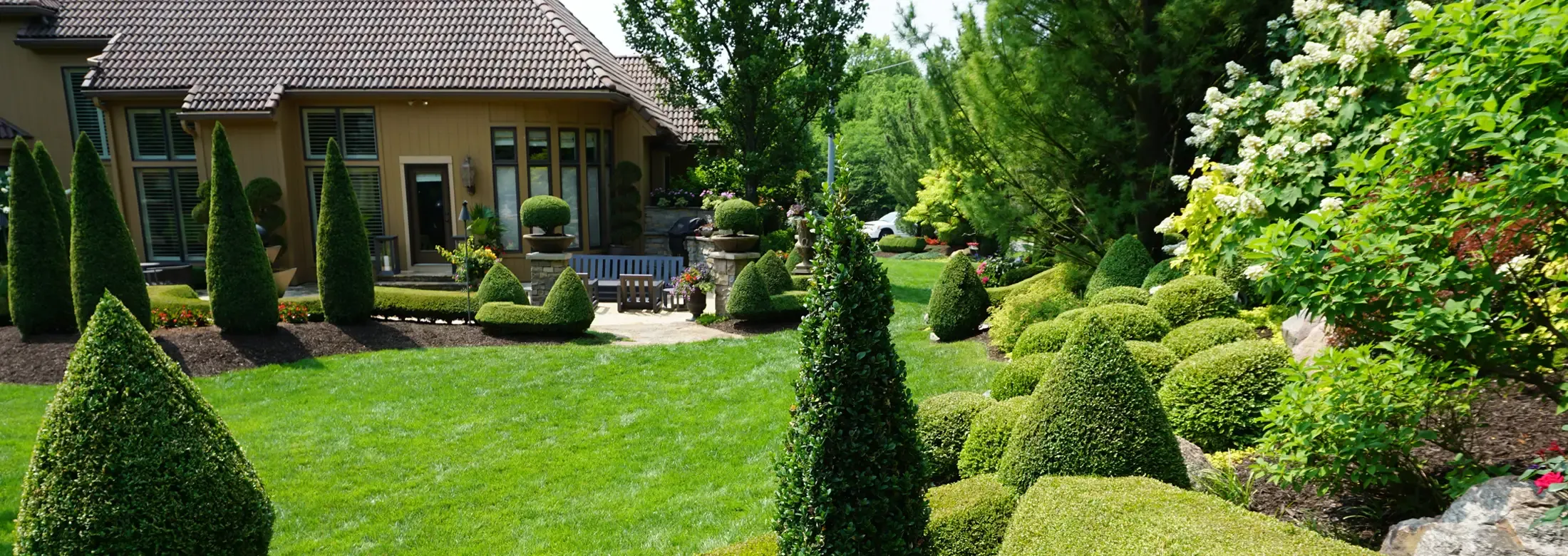
Trees and shrubs take years to mature. Our treatment program keeps them healthy, so you're not starting over.
Tree & Shrub Care in Gardner, KS
Your trees and shrubs do a lot of work in your landscape. They frame your home, add real property value, and fill in the spaces that make everything else look intentional. But just like your lawn, they face constant pressure from pests, disease, and poor soil nutrition — and most of that happens quietly, below the surface, before you ever notice something is off.
The good news is that getting ahead of those problems is straightforward when you have the right program in place. Our horticulture specialists build a year-round treatment plan that keeps your ornamental plants fed, protected, and performing the way they should, season after season. Think of it as the same investment logic as your lawn care, applied to everything else growing on your property.
Here is what our tree and shrub care program includes in Gardner:
- Seasonal Tree Fertilization
- Insect Control
- Disease Control
- And Dormant Oil Applications
DreamLawn brings the same biological approach we use in lawn care to your trees and shrubs, feeding roots with balanced nutrition and beneficial soil microbes that build long-term resilience. If your landscape is worth protecting, a consistent care program is the smart way to do it.

Additional Services in Gardner

Your Trees and Shrubs Deserve More Than a Glance From the Curb
Tree and shrub care goes well beyond keeping things green. From clay soil stress to pest pressure that quietly weakens root systems, the plants framing your property face real threats every season. A structured, year-round approach is how healthy landscapes stay that way, and it starts with feeding the soil, not just the foliage.
Here is how the program works, from first treatment to last:
- A trained specialist evaluates your trees and shrubs for signs of disease, pest activity, or nutrient deficiency before any treatment begins.
- Seasonal fertilization delivers balanced nutrition directly to the root zone, supported by beneficial soil microbes that improve uptake naturally.
- Targeted insect control addresses borers, scale, mites, and other damaging pests at the right time in each pest's life cycle.
- Disease treatments protect against fungal and bacterial conditions common to ornamental trees and shrubs in the region.
- Dormant oil applications are timed to suppress overwintering insects before they emerge and establish.
- Year-round monitoring keeps small problems from becoming expensive ones by the time the next season arrives.
Why DreamLawn Is the Right Call for Tree and Shrub Care in Gardner
DreamLawn brings the same structured, biology-based approach to trees and shrubs that it applies to turf, so nothing in your landscape gets treated as an afterthought. Homeowners in Gardner with HOA curb appeal standards and real family use expectations need a program that holds up across every season, and that is exactly what this one is built to deliver.

Your Neighborhood Team, Ready When You Need Us
When something is off with your trees or shrubs, you want someone who already knows your area, not a call center routing your request across the state. Our team lives and works right here, participates in local events, and genuinely cares about the neighborhoods we serve.
DreamLawn understands the regional growing conditions, seasonal patterns, and local stressors that affect your landscape, so we can get to you quickly and get it right the first time.
Warning Signs Your Trees and Shrubs Are in Trouble
Most tree and shrub problems do not announce themselves all at once. They build gradually, and by the time something looks seriously wrong, the stress has usually been affecting the plant for weeks or longer. Knowing what to watch for means you catch issues while they are still manageable.
Common signs Kansas homeowners should watch for:
- Yellowing, browning, or early leaf drop outside of fall
- Sparse or stunted new growth in spring
- Sticky residue or visible webbing on leaves and branches
- Small holes, sawdust-like material, or bark damage on trunks
- Discolored patches, powdery coating, or dark spots on foliage
- Wilting that does not improve after watering
These symptoms can come from insects, disease, nutrient deficiencies, or soil conditions, and they often overlap in ways that make the root cause easy to miss. Getting an accurate read on what is actually happening is the first step toward keeping your landscape in strong shape.
