
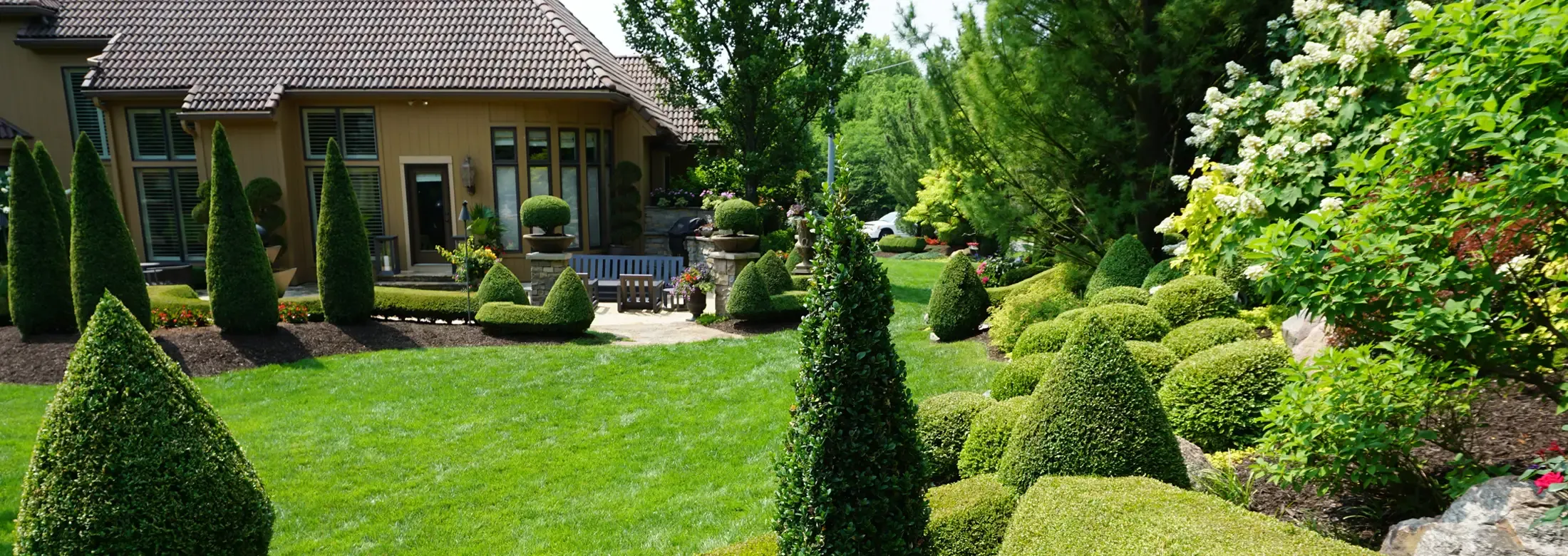
Trees and shrubs take years to mature. Our treatment program keeps them healthy, so you're not starting over.
Tree & Shrub Care in Overland Park, KS
Your trees and shrubs do a lot of heavy lifting in your landscape. They add structure, shade, and real value to your property — and like any investment, they need consistent care to stay that way. Pests, disease, and poor nutrition can quietly work against even the healthiest-looking plants, and by the time the damage is visible, it is often already significant.
That is where a trained horticulture specialist makes a real difference. Our team monitors your ornamental plants throughout the year, catching problems early and treating them before they get out of hand. We use the same living biology behind our lawn care program to feed trees and shrubs at the root zone, which means better nutrient uptake and stronger plants, season after season.
Here is what our tree and shrub care program in Overland Park includes:
- Tree Fertilization
- Insect Control
- Disease Control
- And Dormant Oil Applications
DreamLawn builds programs that protect what you have already invested in. If your trees and shrubs have not had professional attention in a while, now is a good time to change that.

Additional Services in Overland Park

Your Trees and Shrubs Deserve More Than a Seasonal Glance
Tree and shrub care is easy to overlook until something looks wrong, and by then the damage is often already done. Healthy, well-fed plants with strong root systems are far more resistant to the disease cycles and insect pressure that quietly compromise landscapes every season. Targeted nutrition, soil biology, and consistent monitoring are what keep your trees and shrubs performing year after year in Overland Park.
Here is how the program works from the ground up:
- A trained specialist assesses your trees and shrubs to identify existing stress, disease symptoms, or active insect pressure before treatment begins.
- A root zone treatment delivers balanced nutrition and beneficial soil microbes directly where your plants absorb them, strengthening uptake and stress resistance naturally.
- Targeted insect control addresses borers, scale, mites, and other damaging pests before populations establish and spread.
- Disease control treatments are applied based on what your specific plant varieties are vulnerable to, not a generic one-size approach.
- Dormant oil applications are timed to the season to reduce overwintering pest populations before they become a spring problem.
- Year-round monitoring keeps your program adjusted as conditions change, so nothing gets missed between visits.
Why Homeowners in Overland Park Trust DreamLawn for Tree and Shrub Care
DreamLawn brings the same living soil biology that drives results in our lawn programs into every tree and shrub treatment, so your entire landscape benefits from a connected, science-backed approach. You get a structured program with a clear schedule, consistent communication, and specialists who recognize plant health problems early enough to actually do something about them. In a neighborhood where curb appeal matters and results are visible, that level of attention makes a real difference.

Your Neighborhood, Our Home Base
When something looks off with your trees or shrubs, you want someone who can get there fast and actually knows what they're looking at. Our team lives right here, works right here, and is plugged into the same community you are.
DreamLawn understands the local growing conditions, seasonal shifts, and the specific pressures that affect plants in Overland Park, so we can respond quickly with treatments that are built for this area, not borrowed from a one-size-fits-all playbook.
Warning Signs Your Trees and Shrubs Are in Trouble
Most tree and shrub problems start small and get overlooked until real damage is done. By the time discoloration or dieback becomes obvious, the issue has often been developing for weeks or longer beneath the surface.
Common signs of tree and shrub stress in Kansas landscapes:
- Yellowing, browning, or early leaf drop outside of normal seasonal patterns
- Visible spots, lesions, or powdery residue on leaves or bark
- Thinning canopy or sparse, stunted new growth
- Small holes, sawdust-like frass, or oozing sap on trunks or branches
- Sticky residue or sooty mold on leaves, often a sign of active insect feeding
- Wilting that persists even after rainfall or irrigation
These symptoms often overlap, and correctly reading what your plants are telling you takes a trained eye. The sooner the cause is identified, the better the outcome for your landscape.
